
Bait
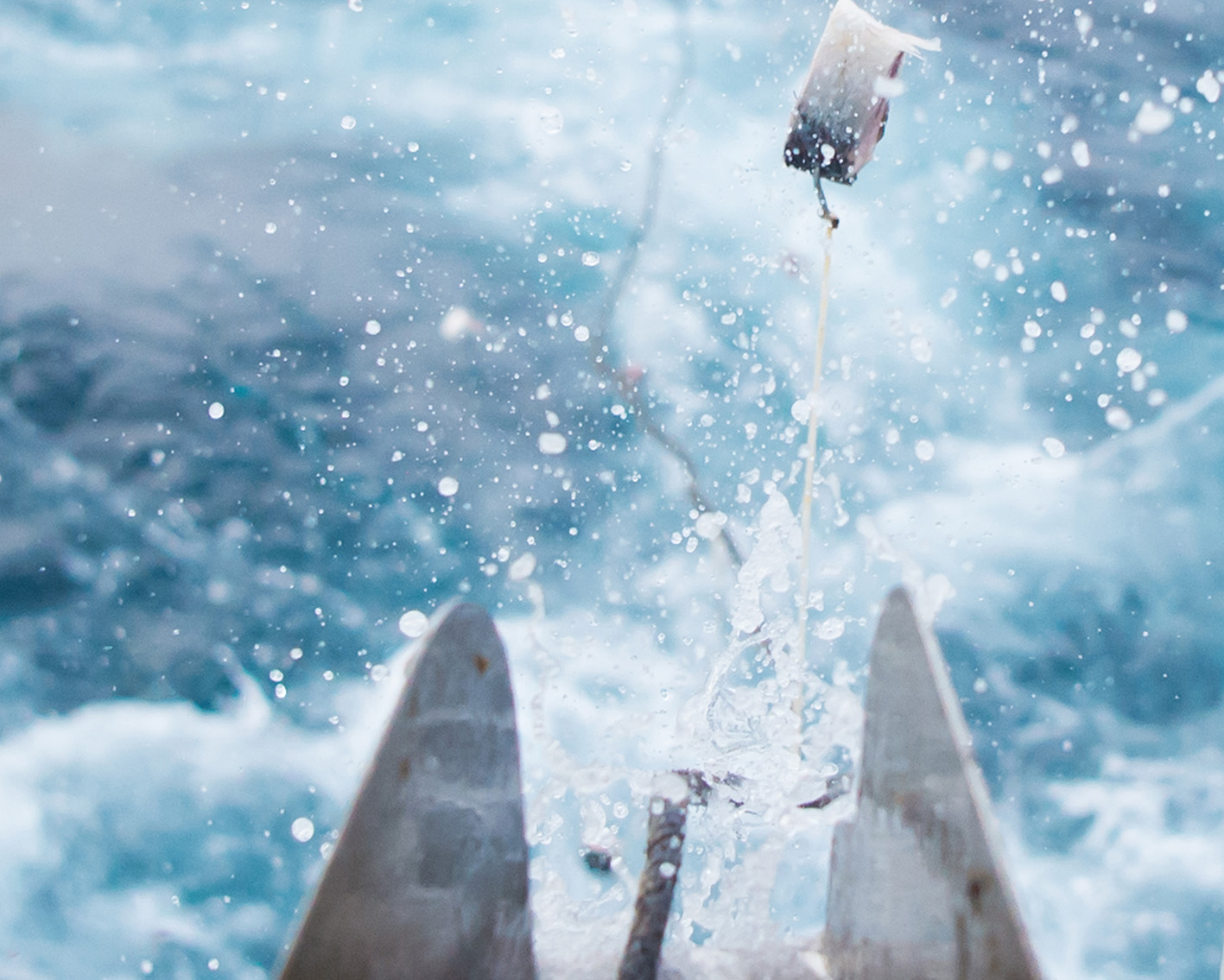
Bait is meant to attract fish, induce them to bite and preferably swallow it. The scent from the bait should disperse in the sea. It is commonly believed that fat bait gives out more scent than lean bait.
When Autolining the quality of the baitfish and the thawing process is essential to succeed. The consistence is important when you bait up to six hooks per second.
Different species of baitfish are being used in our baiting machines around the world. Here we present a range of recommended species, the same species used during the development and testing of our machines.
Baiting
The mouth of a fish is bony presenting the hook with little flesh to penetrate and attach to. The fish often take a piece of bait into its mouth, taste it, and spit it out again without being hooked. Atlantic cod have been observed doing this repeatedly before finally deciding to swallow it. For that reason, it is very important that bait is firmly attached to the hook. If the bait is too loose, or for any other reason is not firmly attached to the hook small fish may easily nibble on it until nothing is left.
To ensure that the bait is firmly attached to the hook it is common practice among seasoned hook and line fishermen to “double crouch” the bait. This means pushing the hook through the skin on one side and out through the skin on the other side, as shown. Fig.25
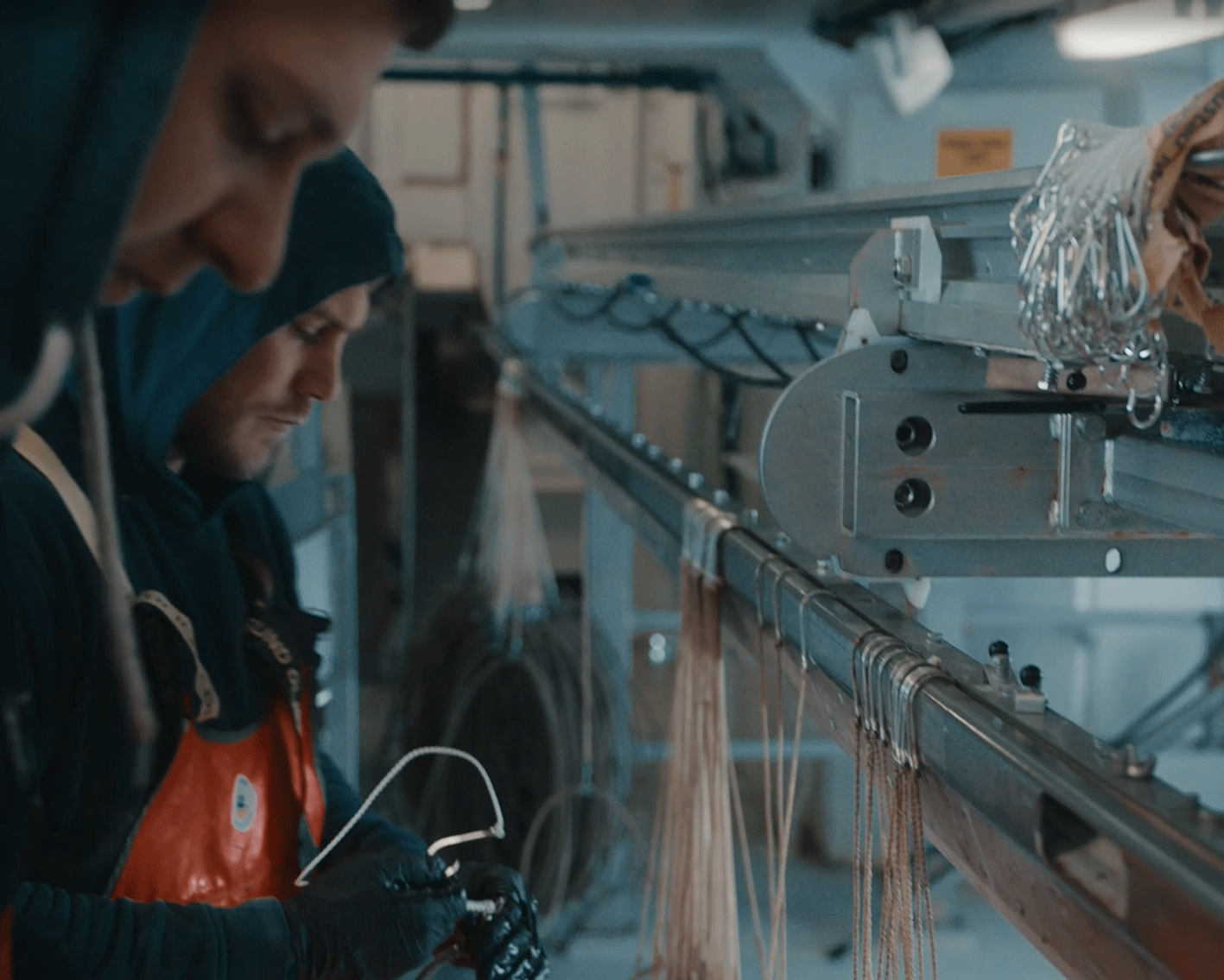
With a Mustad Auto-baiter the hooks and line are pulled from the storage magazines through the baiting machine and over the stern. The bait is placed on a spiked conveyor chain and feds into the baiting machine where the hooks passing through trigger a knife that cuts the bait at a pre-set size. The RotoBaiter function secures precision baiting, and the bait is “double crouched” on to the hook. The most advanced baiting machine can deploy up to six hooks per second at a baiting percentage averaging 95 – 97%. The baiting machine is operated by one crewmember who feeds the bait onto the conveyor chain.
Sometimes it’s an advantage to dress a line with a mixture of bait – a mixture of mackerel and squid for example. Mackerel probably disperses more scent, while squid lasts longer on the hook. Dressing is used a great deal when fishing for cod but check this out locally and find out what to use.
Baitfish
Good quality squid, sauri, mackerel and herring are the most used baitfish for Autolining in the North Atlantic. Bait is stored in a freezer and must be thawed out to the right consistency before use. The size of each piece of bait will vary according to the hook size and type of bait. Between 45lbs/20 kg and 65 lbs/30 kg. per 1,000 hooks is common.
Some of the baitfish used for hand baiting is too big for use in the Mustad Autoline baiting machine unless split and cut. We recommend using whole fish from 200 to 250 gram per fish for best baiting efficiency. (around 10″ length and between 7 to 9 ounces in weight)
The sauri, mackerel, squid and herring make good bait, but they are not all equally good in all respects, at all times of the year or for catching all kinds of fish. If possible, learn from the professionals who have been working the grounds before you.
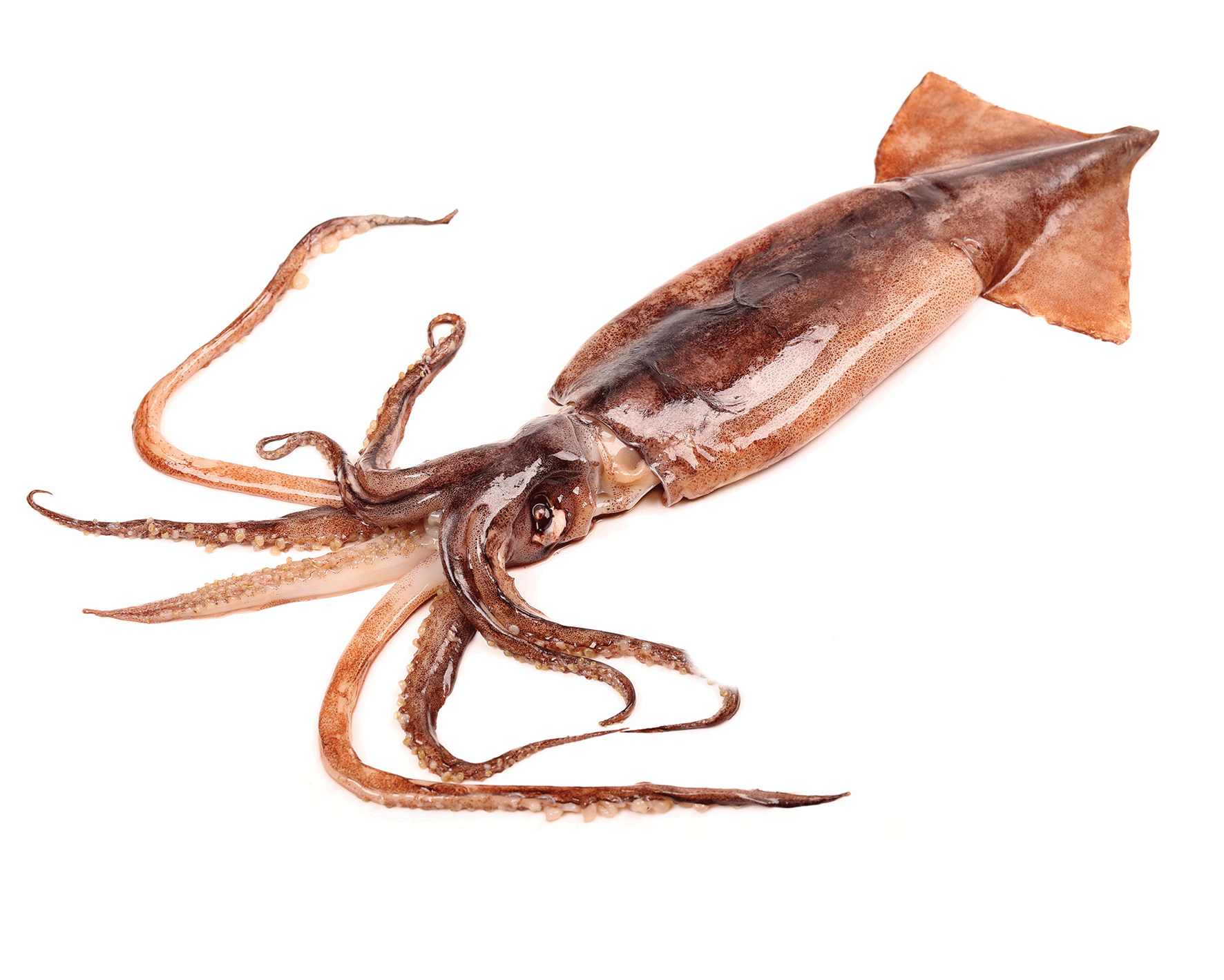
Squid (Illex argentinus)
Although several species of squid are used as Autoline bait, Argentine shortfin squid is the one used in the Barents Sea.
The Illex argentinus is a medium size squid (maximum mantle length 33 cm, maturity length averaging 24 cm) and is harvested on the South American East Coast from Rio de Janeiro South to Cape Horn. The stock is considered as sustainable, classified least concern on IUCN and is a less valued food fish compared to other types of squid.
Squid has a firm, tough meat. It can be very fat and is excellent bait. There are no size limitations on this species for use in Mustad Autoline systems, and it is an optimal baitfish. Squid larger than 16 ounces should have their tentacles chopped off and their body slit in two before going into the baiting machine. Squid should have white meat and a fresh smell. If it begins to smell kind of sour / sweet and the colour has turned slightly pink or lilac, it is beginning to go bad. Remove the skin, and you will see the colour of the flesh better. If the quality is poor, the first place to spot it is at the end of the tentacles.
Squid must be frozen side by side lying in the same direction in blocks no more than 2″ thick, otherwise you will not be able to thaw them without the outer layer turning soft to fast. You will often come across boxes with 2-3 slabs per box. Make sure the slabs are separated with sheets of plastic foil, which prevents them from freezing together. If they are lying correctly, they will come apart easily. The box should be no heavier than 50 lbs/23 kg