


Read the article from FHF – Norwegian Seafood Research Fund; FHF NEWS
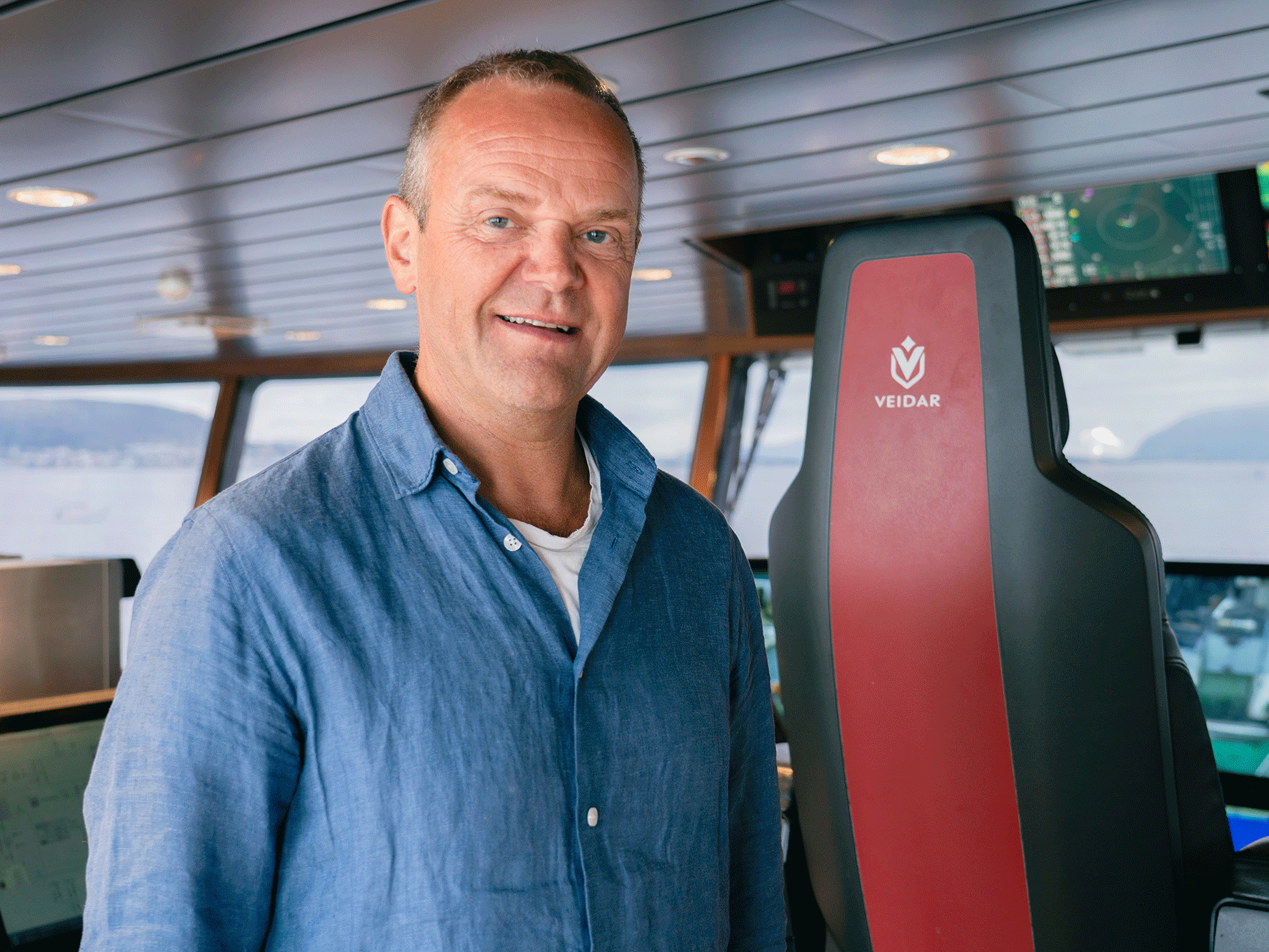
After testing the FOLLA machine under demanding conditions at sea, Sindre Johan Dyb, skipper and Managing Director of Veidar AS, believes the technology represents a significant leap forward in onboard catch handling.
“I would go as far as to say that this is the biggest revolution in fish heading and gutting machinery we have seen in decades,” says Sindre Johan Dyb, skipper and Managing Director of Veidar AS.
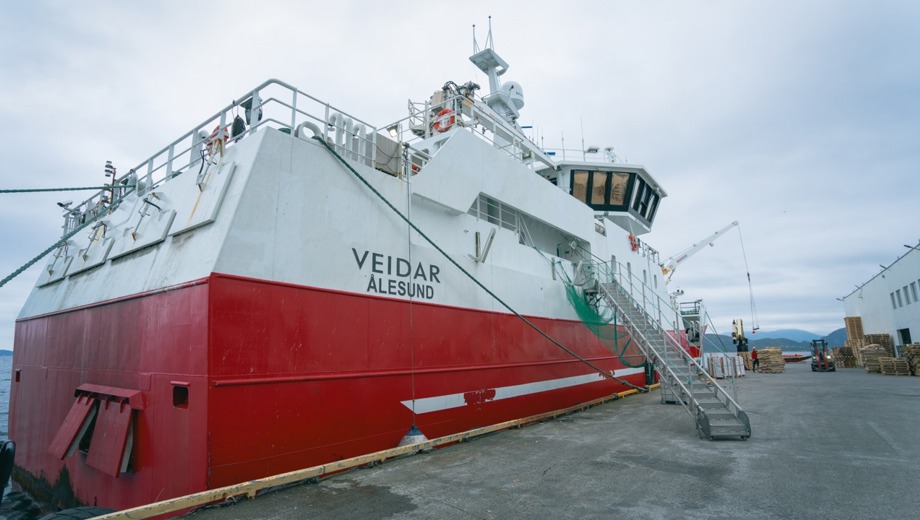
On board the autoline vessel Veidar, the crew has helped test and develop FOLLA 2.0—an automated heading and gutting machine designed to process multiple species and a wide range of fish sizes in a single machine. For the crew, the main priority was improving the working environment.
“It significantly reduces the workload, while improving the quality of both the fish and the raw materials produced on board. It enables precise heading and gutting of several species in the same machine while maintaining a high level of efficiency,” Dyb says.
“We wanted to take part in the project because we were interested in developing a heading and gutting machine that could significantly improve working conditions on board.
The main challenge was the physically demanding work involved in manually heading and gutting fish that could not be processed by our previous heading machines,” Dyb explains.
According to the skipper, what sets FOLLA apart is its ability to process all the fish sizes and most of the species handled on board.
Testet under reelle driftsforhold
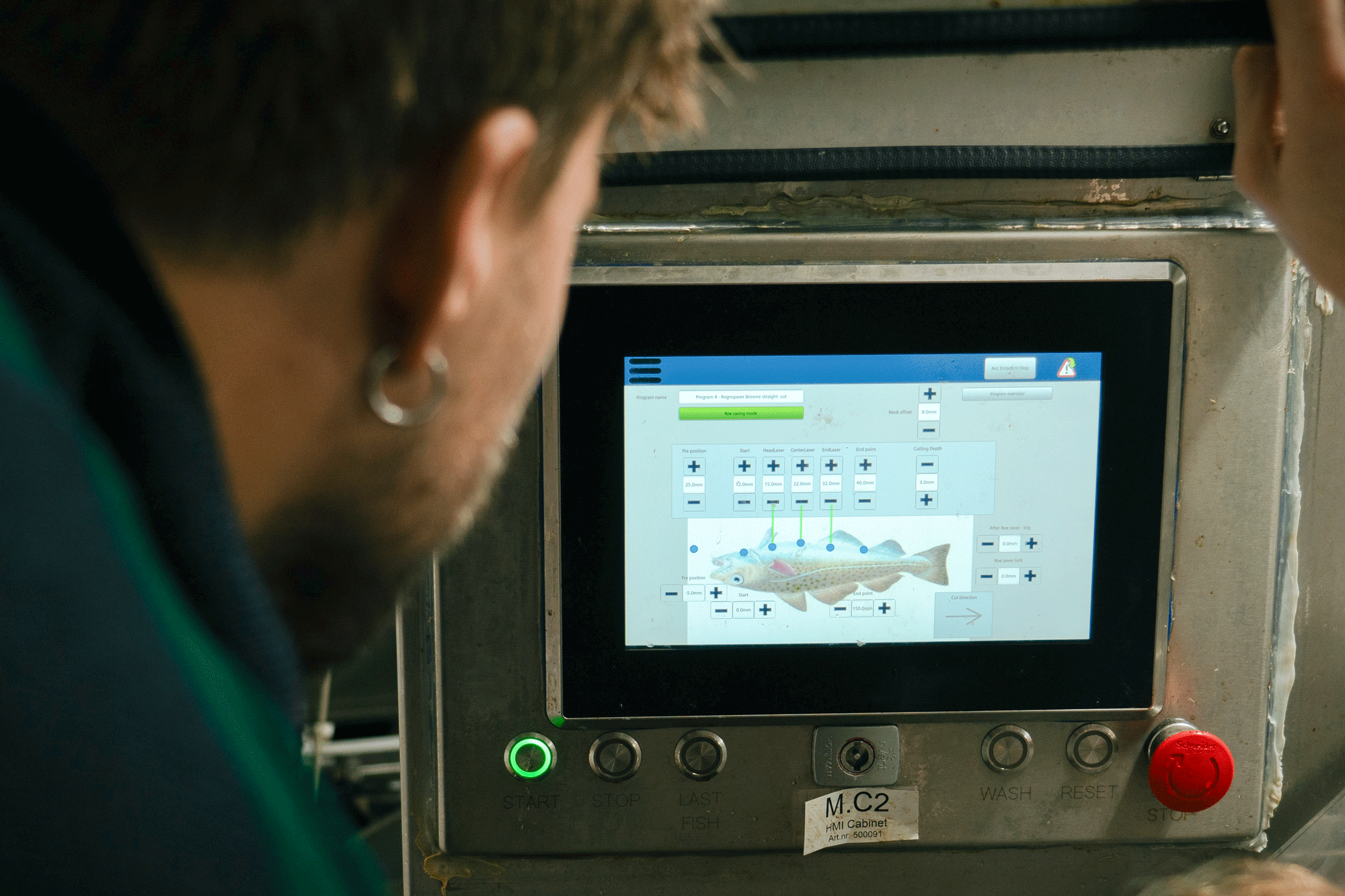
Å få en automatisert maskin til å fungere i et landbasert anlegg er én ting. Ombord på et havgående fiskefartøy utsettes teknologien for saltvann, fuktighet, vibrasjoner, temperatursvingninger, fartøyets bevegelser og lange produksjonsserier. Nettopp derfor ble Veidar en så viktig testplattform.
«FOLLA presterte bedre enn forventet under testingen, selv under krevende forhold. På den første turen etter oppgraderingen var spesialister fra Mustad med oss til sjøs i et par uker for å sikre at alt fungerte som det skulle. Deres tilstedeværelse bidro til å gjøre igangkjøringsprosessen mye smidigere. Det tette samarbeidet med Mustad og Havfront gjennom hele utviklingen av maskinen har vært avgjørende for resultatet,» sier Dyb.
Utviklingsarbeidet inngår i FHF-prosjektet«Marinisering og implementering av FOLLA-utstøtningsmaskinen».
Saltwater demanded new solutions
FOLLA was originally developed by Havfront AS as a gutting machine with a particular focus on the gentle handling of viscera. After Havfront filed for bankruptcy, Mustad Autoline acquired the assets from the bankruptcy estate and continued developing the technology.
According to Lasse Rindahl, Chief Technology Officer at Mustad Autoline, the need extends beyond one particular vessel group or fish species.
“There is an unmet need in the ocean-going fleet for a universal gutting machine that handles roe and liver gently, accommodates variations in species and size, and reduces physically demanding manual work,” says Rindahl.
However, significant parts of the system had to be adapted to ensure reliable operation at sea. A new mechanical design was developed, and conventional AC motors were replaced with IP69-rated servo motors. The sensors were given mechanical protection, optical sensors are cleaned using compressed air, and sensitive control electronics were relocated away from the wet production environment.
The software has also been further developed, allowing the machine to be adapted to different species, fish sizes and operating conditions.
Potential to reduce crewing requirements
For Veidar, however, the benefits extend far beyond the machine’s technical performance.
“We are seeing significant benefits in several areas, including safety, resource utilisation and, not least, reduced physical strain on the crew,” says Dyb. He also highlights a direct financial benefit.
“FOLLA reduces the workload, allowing us to operate with fewer crew members on board. It also preserves more of the valuable by-products—particularly whole, intact roe. In addition, it requires less maintenance than the machines we have previously used.”
The technology therefore addresses several of the challenges facing the fishing fleet: labour requirements, health and safety, efficient production, and improved utilisation of the entire catch.
Creating value from more of the fish
The gentle handling of the viscera is a key part of the concept. If roe and liver are damaged during gutting, the opportunities to make further use of these valuable raw materials are reduced.
The aim of FOLLA is therefore not simply to automate the operation, but to do so with sufficient precision to preserve the quality and value of a greater proportion of the by-products. At the same time, a single machine is designed to perform tasks that might otherwise require several specialised solutions.
For Dyb, the results from practical operation have been clear so far.
“It significantly reduces the workload, while improving the quality of both the fish and the raw materials produced on board. It enables precise heading and gutting of several species in the same machine while maintaining a high level of efficiency,” he says.
The automation journey is not yet complete
Although the experience on board Veidar has been positive, the technology is still being developed.
One current limitation is that the fish must have a bleeding cut before entering the machine. Processing fish directly without this preliminary cut could therefore be the next stage of development.
Another potential development is the automated and gentle onward handling of the viscera. If successful, an increasing share of the process—from the fish entering the onboard factory to the fish, roe, liver and other raw materials being directed into separate product streams—could be automated.
“Technology must be developed together with those who will use it”
For FHF, the experience gained on board Veidar is valuable beyond the development of this particular machine.
“If we are to succeed in automating more of the fishing fleet’s catch-handling operations, the technology must be developed and tested together with the people who will actually use it. It is only when the solutions are installed on board and exposed to fish, seawater, salt, vessel movement and continuous operation that we truly discover what works and what needs to be improved,” says Frank Jakobsen, Head of Department at FHF.
The Norwegian fishing fleet is technologically advanced, but many operations could still be automated.
He believes automation can deliver benefits in several areas at the same time.
“It is about efficiency, but also about health and safety, quality, and retaining more of the value from the catch. If technology can reduce heavy manual work while improving the utilisation of both the fish and its by-products, it is relevant to the entire industry.”
Jakobsen therefore believes it is important for FHF to continue its work on automation in close collaboration with the fishing fleet and the supplier industry.
“The Norwegian fishing fleet is technologically advanced, but many operations could still be automated. For FHF, it is important to continue working closely with the industry so that solutions are developed around genuine operational needs on board. The experience gained from Veidar provides valuable knowledge that we can apply to the development of the catch-handling solutions of the future,” says Jakobsen.